
The legal and practical side of sports betting online in Serbia sits beneath every slip a licensed operator accepts, and most casual players meet it only when something unusual happens. This long piece walks through what the Serbian regulatory package actually requires of operators and players, how the practical compliance looks from inside an account, what happens when disputes arise, and the small habits that keep a Serbian player on the right side of the legal and practical lines without having to think about it.
None of this is legal advice. The information below is a reading of publicly available regulatory material and operator practice. A specific question about your own case belongs with a qualified Serbian lawyer or tax adviser.
| Legal element | Where it lives | What a player sees |
|---|---|---|
| Licensing framework | Games of Chance Administration register | Operator licence number in footer |
| Capital and deposit | Ministry of Finance records | Backing for player balances |
| KYC and age verification | Operator-regulator IT exchange | Document checks at signup |
| Tax on winnings | Serbian income tax rules | Twenty percent above 100,000 RSD threshold |
| Responsible-play tools | Required operator features | Limits and self-exclusion in menu |
| Advertising rules | Addiction-prevention warnings mandatory | Warning text on every ad |
| Dispute resolution | Operator first, regulator second | Support ticket, then formal complaint |
The Licensing Framework Is the Foundation
The Serbian licensing framework for betting operators was set out in the 2020 Act on Games of Chance, which took effect on 10 April 2020. The Act replaced the earlier regime and raised the regulatory floor across capital requirements, operational obligations and technical oversight. Amendments passed in 2024, with key provisions in force from January 2025, further tightened KYC, self-exclusion data exchange and advertising rules.
Note. The 2020 Act and its 2024 amendments together form the current regulatory backbone of the Serbian licensed market.
- 2020 Act adopted in March, in force from 10 April 2020
- 2024 amendments with key provisions in force from January 2025
- Compliance deadline of 10 July 2021 for the 2020 package
- All current operators on the register meet both frameworks
Every operator on the current Serbian licensed register has already met the requirements of the Act, including a 15-month compliance deadline that fell on 10 July 2021. For the player, this means every licensed operator is a known-good counterparty with specific legal obligations to the regulator and to its account holders.
What the Capital Requirement Means for a Player
The capital requirement for an online gambling licence under the 2020 Act is EUR 250,000 of share capital, with an additional EUR 300,000 bank deposit or guarantee lodged with the regulator. The capital is not a wealth signal; it is a backstop that protects player balances if the operator collapses.
From a player’s point of view, this backing is invisible most of the time. It only surfaces during a dispute or an operator insolvency, which are rare events in the Serbian licensed market. The capital is the quiet floor beneath the whole arrangement, and the Games of Chance Administration monitors it continuously.
KYC and Age Verification Are Legal Requirements
KYC and age verification are legal requirements under the Serbian framework, not operator preferences. Every licensed operator must verify the identity, age and address of every account holder, and the data from this verification is exchanged with the regulator through the IT communications system that the 2020 Act requires non-casino operators to run in real time.
Reality check. KYC is not operator discretion; it is a regulatory requirement enforced through the IT exchange with the Serbian regulator.
From the player’s side, this surfaces as the document check at signup, the second document request before the first withdrawal, and occasional refresh requests when the regulatory requirements update. The 2024 amendments tightened these processes further from January 2025.
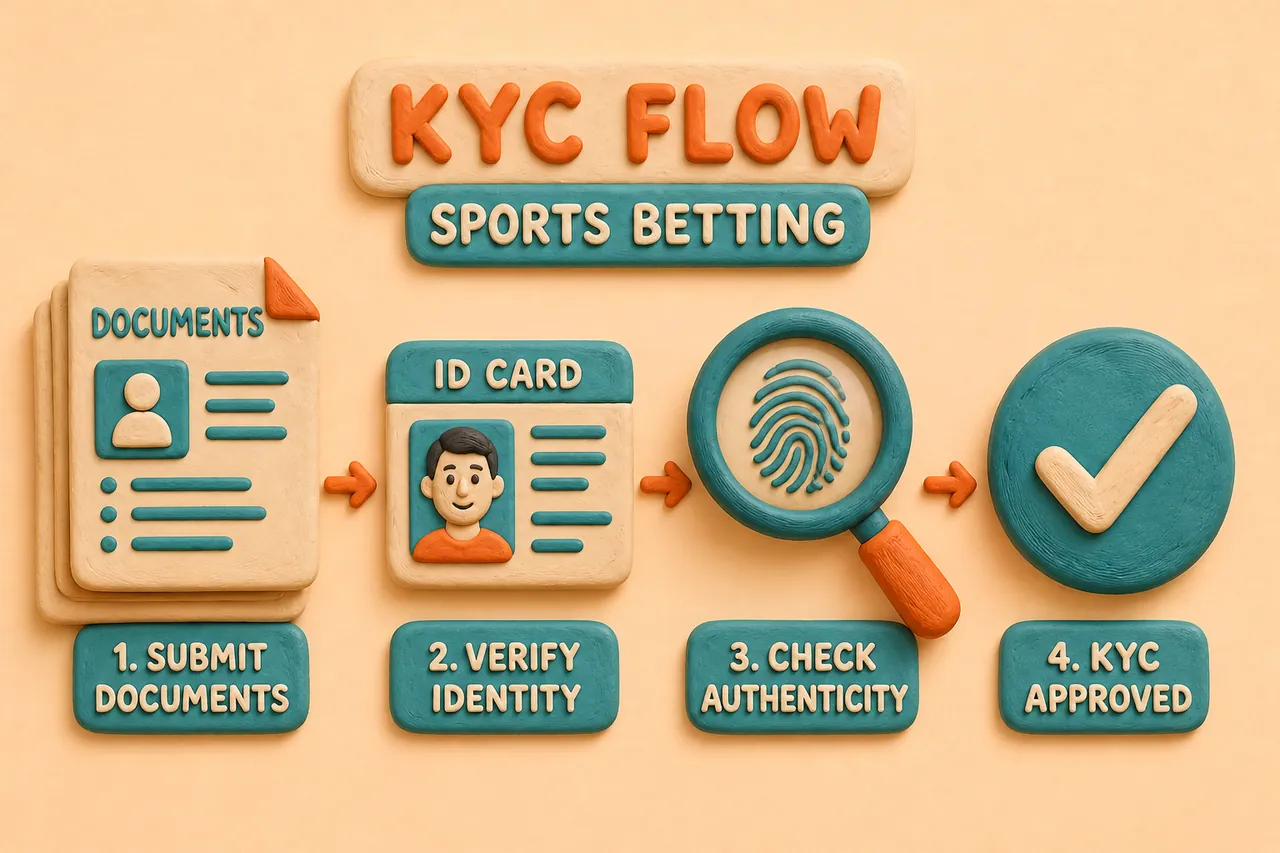
| KYC element | What is required |
|---|---|
| Identity document | National ID or passport |
| Address proof | Current-month utility or bank statement |
| Facial verification | Selfie or short video |
| Payment ownership | Card or account proof |
| Regulator exchange | Automatic data sharing |
Why the 18-Year-Old Threshold Matters
The minimum age for any form of gambling in Serbia is 18. The threshold applies to online betting, land-based shops, slots and casinos equally. Operators that fail to enforce this face penalties under the Act, and the regulator conducts periodic compliance sweeps on both land-based and online venues.
For a player, this means the age verification at signup is non-negotiable and non-skippable. The 2024 amendments formalised the data-exchange requirement so that an underage account cannot be opened at one operator and ported to another without the system flagging it.
Tax on Winnings Is Reference Information
Serbian tax rules apply a twenty percent charge on winnings above 100,000 RSD on a single payout. The threshold is roughly 850 euros at a stable exchange rate. For most casual Serbian players, the threshold rarely bites because weekly flat-stake tickets do not usually produce single payouts above the line.
- Twenty percent on winnings above 100,000 RSD per single payout
- Threshold roughly 850 euros at a stable exchange rate
- Not withheld by operators; player responsibility
- Ledger notes catch any payout approaching the line
Where the line can bite is on long-price multi-leg accumulators that land, outright tournament winners that come in at long odds, and occasional derby weekend specials with a specific side bet. Keeping a short ledger of any single payout approaching 100,000 RSD is the simple hygiene that makes the paperwork easy at the end of the year.
Reference. This is tax information from public sources, not tax advice. A specific case belongs with a qualified Serbian tax adviser.
How Operators Handle the Tax Line
Operators do not withhold the player-side tax at payout time. The twenty percent charge is a player responsibility; the operator pays its own fifteen percent GGR tax separately. For the player, this means the full winning amount lands in the account on withdrawal, and any tax obligation on winnings above the line is handled separately through the Serbian tax system.
Operators do, however, keep complete records of all payouts and settle their own tax obligations with the regulator through the IT exchange. If a tax question later arises about a specific payout, the records exist on both sides of the exchange.
Responsible-Play Tools Are Legal Requirements Too
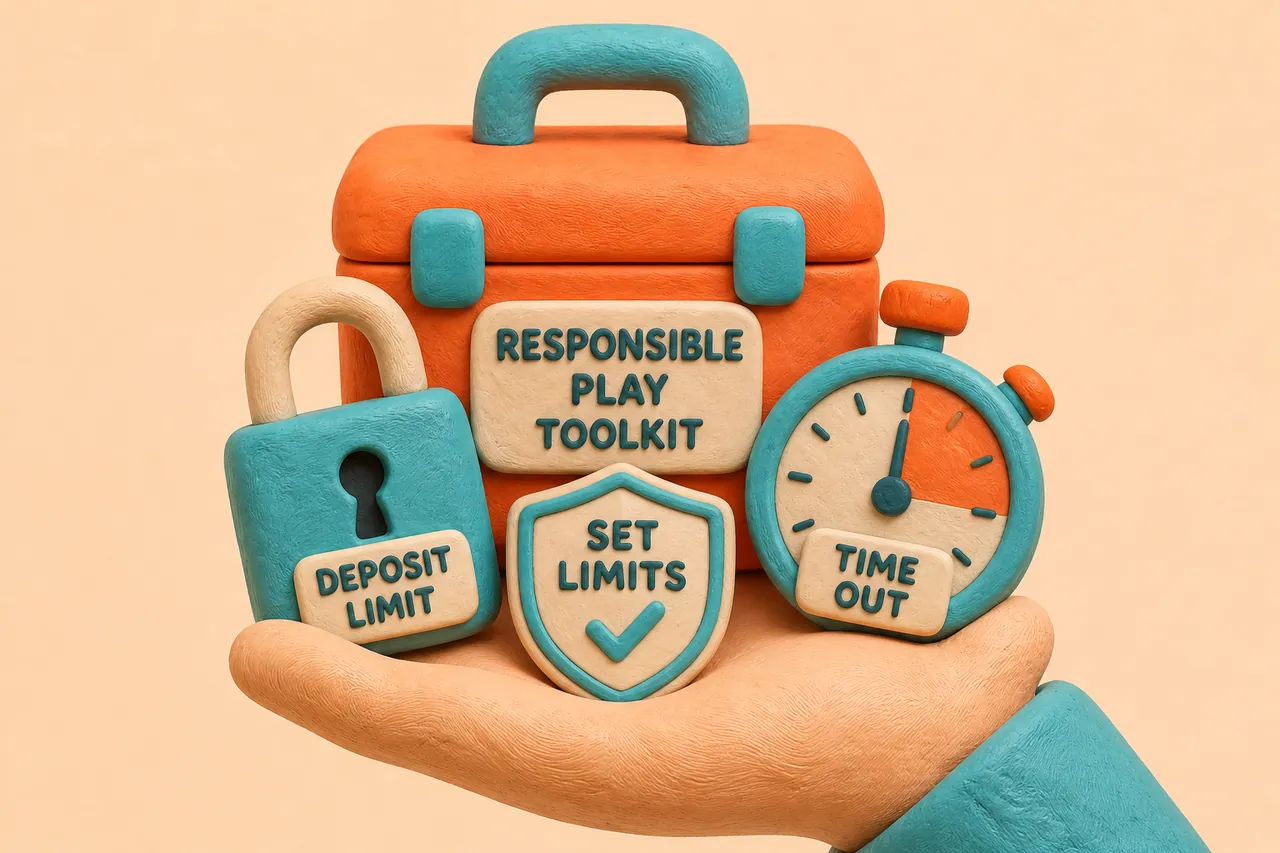
Serbian licensed operators are legally required to offer the responsible-play toolkit. The deposit limit, loss limit, session timer, reality check, cool-off window and self-exclusion channel are not value-added features; they are required functions under the regulatory package. The January 2025 amendments made the controls more prominent in the account menu.
Observation. The responsible-play toolkit is required by the Serbian regulatory package, not a value-added feature from the operator side.
| Toolkit element | Where it lives in the account |
|---|---|
| Deposit limit | Account settings or responsible gambling panel |
| Loss limit | Responsible gambling panel |
| Session timer | Account settings |
| Cool-off window | Responsible gambling panel |
| SPIS self-exclusion | Responsible gambling panel |
From a player’s point of view, the toolkit is the single most tangible benefit of the licensed-site requirement. Unlicensed operators do not carry these obligations, which means an unlicensed account offers no enforceable self-exclusion, no cool-off, no reality check and no integration with the SPIS centralised register.
SPIS as the Centralised Backbone
SPIS, the industry player protection body launched in Belgrade with Mozzart and MaxBet among its founding members, centralises self-exclusion across member operators. A self-exclusion registered through SPIS applies at every member operator for the chosen window, which is a stronger protection than operator-by-operator self-exclusion would be.
The SPIS campaign “Even One Is Too Many” works with the Special Hospital for Addiction Diseases in Belgrade to educate teenagers in sports clubs. These campaigns are not legal requirements, but they operate inside the same regulatory ecosystem and inform how the licensed market thinks about its responsibilities.
Advertising Rules Have Teeth
Serbian advertising rules for gambling require every ad to carry an addiction-prevention warning in addition to the existing underage-gambling warning. The rules were formalised in the 2020 Act and tightened in the 2024 amendments. Operators cannot target vulnerable groups, cannot promise returns, and cannot imply skill-based control over outcomes.
For a player, this means every billboard, television spot, online banner and social media promotion from a Serbian licensed operator carries the mandatory warning. The warning is sometimes small, but it is legally required to be present and legible.
What the Rules Actually Prohibit
The rules prohibit specific framings. Celebrity endorsements that imply control over outcomes. Promotions that target under-21 audiences. Welcome bonuses advertised without the terms visible. Promises of specific returns from gambling activity. Any content that normalises problem-gambling behaviour.
The rules do not prohibit general promotion of licensed operators, specific welcome bonus marketing with clearly stated terms, or sponsorship arrangements that follow the responsible-play framework. The line is where the promotion starts to shade into misrepresentation of the hobby’s actual nature.
Dispute Resolution Has a Specific Path
When a dispute arises between a player and a Serbian licensed operator, the path is specific. The first step is the operator’s support team, usually through chat or email. The second step, if the operator does not resolve the issue, is a formal complaint to the Games of Chance Administration under the Ministry of Finance. The regulator can review the operator’s records of the ticket, the account, the KYC and the settlement, because the data exchange exists in real time.
Note. The dispute path is specific and short on the licensed Serbian market, which keeps most issues resolvable within business days.
- Operator support team as first step
- Formal complaint to Games of Chance Administration if unresolved
- Regulator access to operator ledger via IT exchange
- Documented resolution usually within business week

Serious disputes are rare on the Serbian licensed market because the operator incentive to resolve them quickly is high. The capital at stake, the regulatory visibility, and the reputational consequence inside a small national market all push resolution. For the player, this means a well-documented complaint usually clears inside two or three business days when the operator is at fault.
How to Document a Dispute Well
A well-documented dispute includes four things: the account registration date and ID, the specific ticket number and settlement timestamp, screenshots of the account history around the disputed event, and copies of any support correspondence. The operator will usually ask for the same information in a specific format, which is why keeping a parallel copy on your own side costs nothing and saves time.
A guide such as www.burazbet.com is a good thing for a Serbian player here because it covers only operators on the Games of Chance Administration register, where the dispute path is clear and the regulator can be reached. This saves the player from the common problem of a dispute at an unlicensed operator, where neither the regulator nor the capital backing exists.
What Players Should Do Before Signing Up
Before signing up at a Serbian site, three legal and practical checks are worth running. First, confirm the operator is on the public register of the Games of Chance Administration. Second, read the terms and conditions for the specific sections on withdrawals, promotions, dispute resolution and self-exclusion. Third, look at the responsible-play toolkit location in the account menu, because its visibility is a quick proxy for the operator’s cultural attitude toward player protection.
- Verify on the public register
- Read terms sections on withdrawals and promotions
- Check responsible-play toolkit menu placement
- Note the operator’s support channels and response times
- Save the registration confirmation email in a labelled folder
These five steps take under thirty minutes and remove most of the common legal and practical surprises that casual Serbian players meet in their first season.
What Changes When Something Unusual Happens
Unusual events include a disputed settlement, a delayed withdrawal, a KYC flag at a crucial moment, or a technical glitch on the operator side. Each has a specific resolution path within the Serbian licensed framework. The first step is almost always the operator’s support team; the escalation path exists for cases where the first step does not resolve the issue within a reasonable window.
Reference. Unusual events are rare on the Serbian licensed market thanks to the capital, regulatory visibility and dispute path together.
- Disputed settlement goes to operator support first
- Delayed withdrawal usually clears with a KYC refresh
- KYC flag at a key moment resolves with a cleaner document
- Technical glitches surface in operator incident reports
Serious events like an operator insolvency are rare on the Serbian market, partly because the capital requirement and the regulatory visibility make them hard to hide. If one did occur, the EUR 300,000 bank deposit or guarantee lodged with the regulator would be the first line of recovery for player balances, up to the limits of the backing.
Why the Licensed Side Carries Lower Risk
The licensed side of the market carries lower practical risk than the unlicensed side across almost every dimension. KYC is harder to game, which protects against fraud on both sides. The IT exchange makes the ledger visible to the regulator, which protects against hidden operator practices. The capital backing protects against collapse. The dispute path has a formal escalation. None of this exists in the unlicensed market in any enforceable way.
For a Serbian player, the practical choice to run the hobby inside the licensed market is one of the few decisions that compounds across a full season without any ongoing effort. Make the decision once, open the account at a licensed operator, and the legal and practical floor takes care of most of the risks that would otherwise require constant attention.
What Carries Across the Legal and Practical Side
What carries across everything above is a short set of habits. Use a licensed operator. Submit real KYC details. Set the deposit limit in advance. Keep a ledger of weekly stakes. Note any payout approaching the tax line. Save registration and support emails. Read the terms once per operator. Use the responsible-play toolkit without feeling shy about it.
Takeaway. The habits below cover almost every legal and practical surprise a Serbian player meets in their first season.
- Use a licensed operator
- Submit real KYC details
- Set the deposit limit in advance
- Keep a weekly ledger
- Save registration and support emails
None of these habits require legal expertise. All of them keep a Serbian player on the right side of the legal and practical lines across a full season, without ever having to think of the hobby as a legal problem. That is the quiet value of running the hobby inside a mature licensed framework.
The legal and practical side of sports betting online is not something a Serbian player should fear. It is the floor beneath the hobby, visible once, and invisible after that if the habits above are in place.