Flop, Turn, & River Cards in Texas Hold’em: A Complete Guide
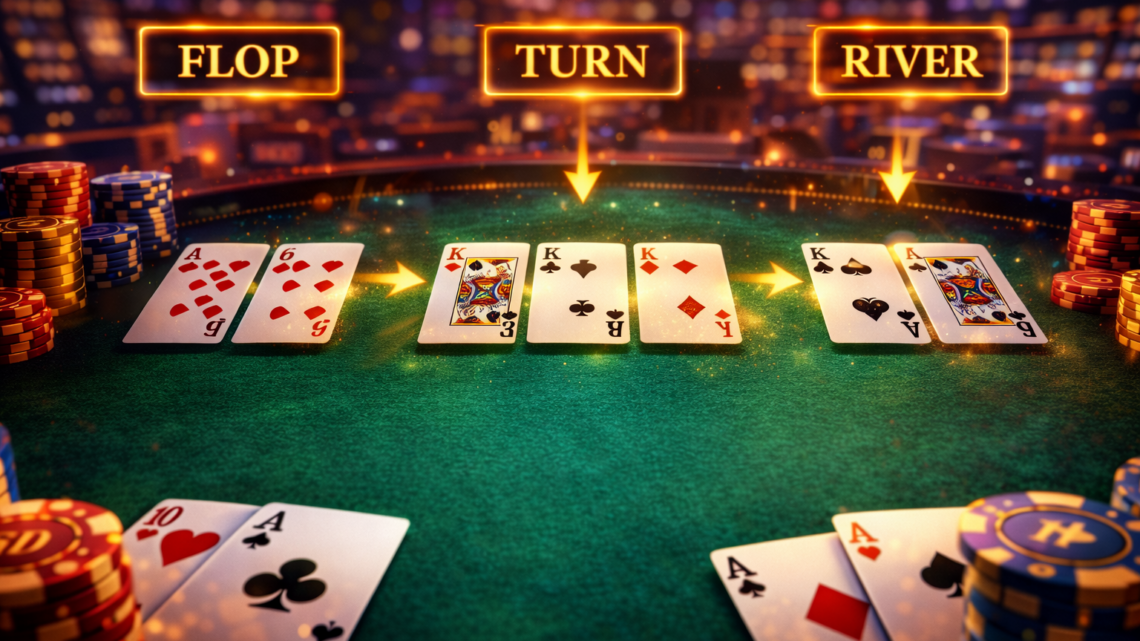
Texas Hold’em uses community cards that are revealed in three stages: the flop, turn, and river. The flop shows three cards at once, the turn adds one more card, and the river reveals the final card. These five community cards combine with your two private hole cards to make your best five-card poker hand.
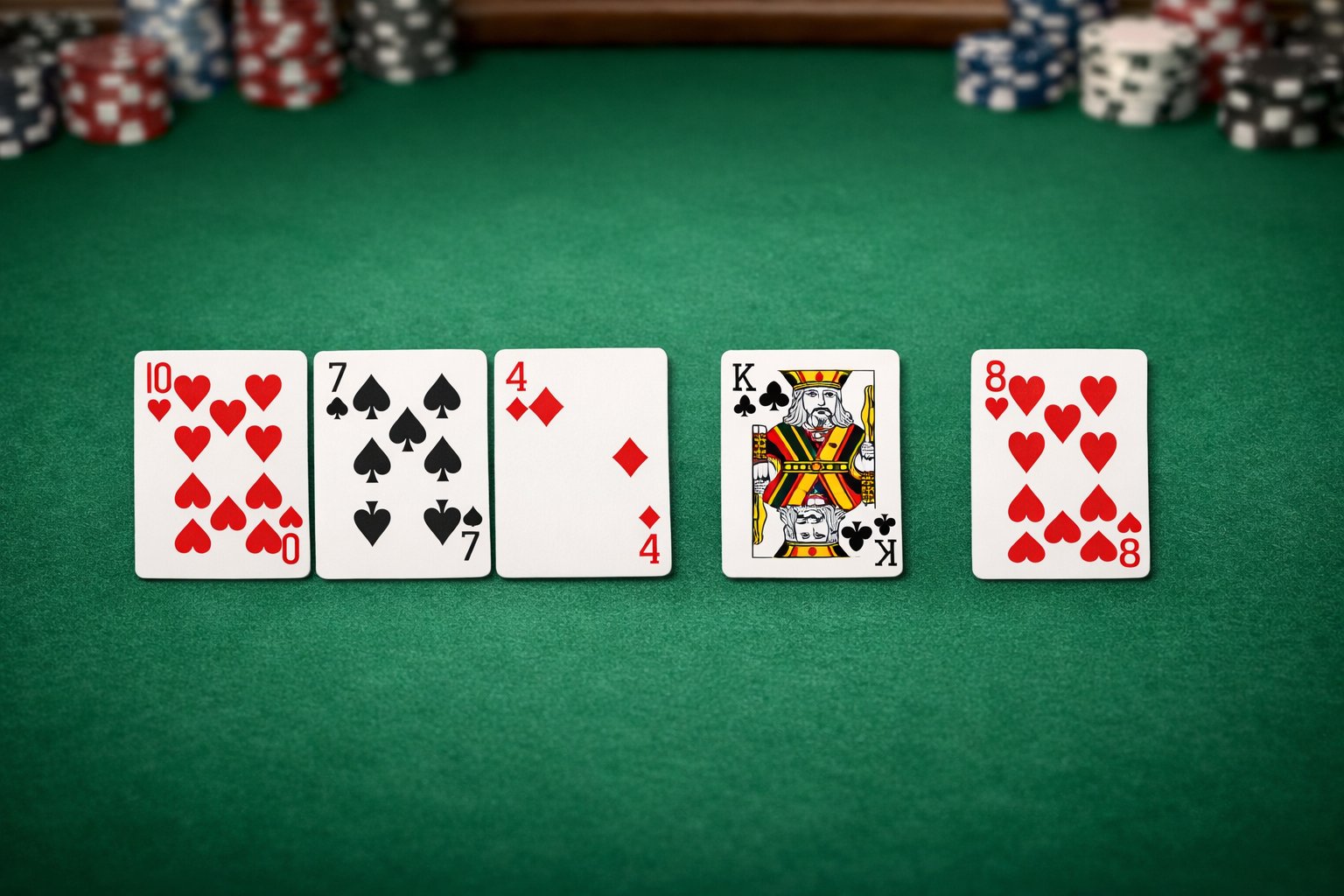
Understanding how these cards work is essential for playing Texas Hold’em well. Each stage gives you new information about your hand strength and creates chances to bet, raise, or fold. The way the board develops across these three stages shapes every decision you make during a hand.
Learning to play the flop, turn, and river correctly separates winning players from losing ones. This guide will show you how to read the board, evaluate your hand at each stage, and make smart choices when the cards are revealed. You’ll learn the basic strategies for each stage and the key concepts that help you improve your game.
Understanding the Flop, Turn, and River
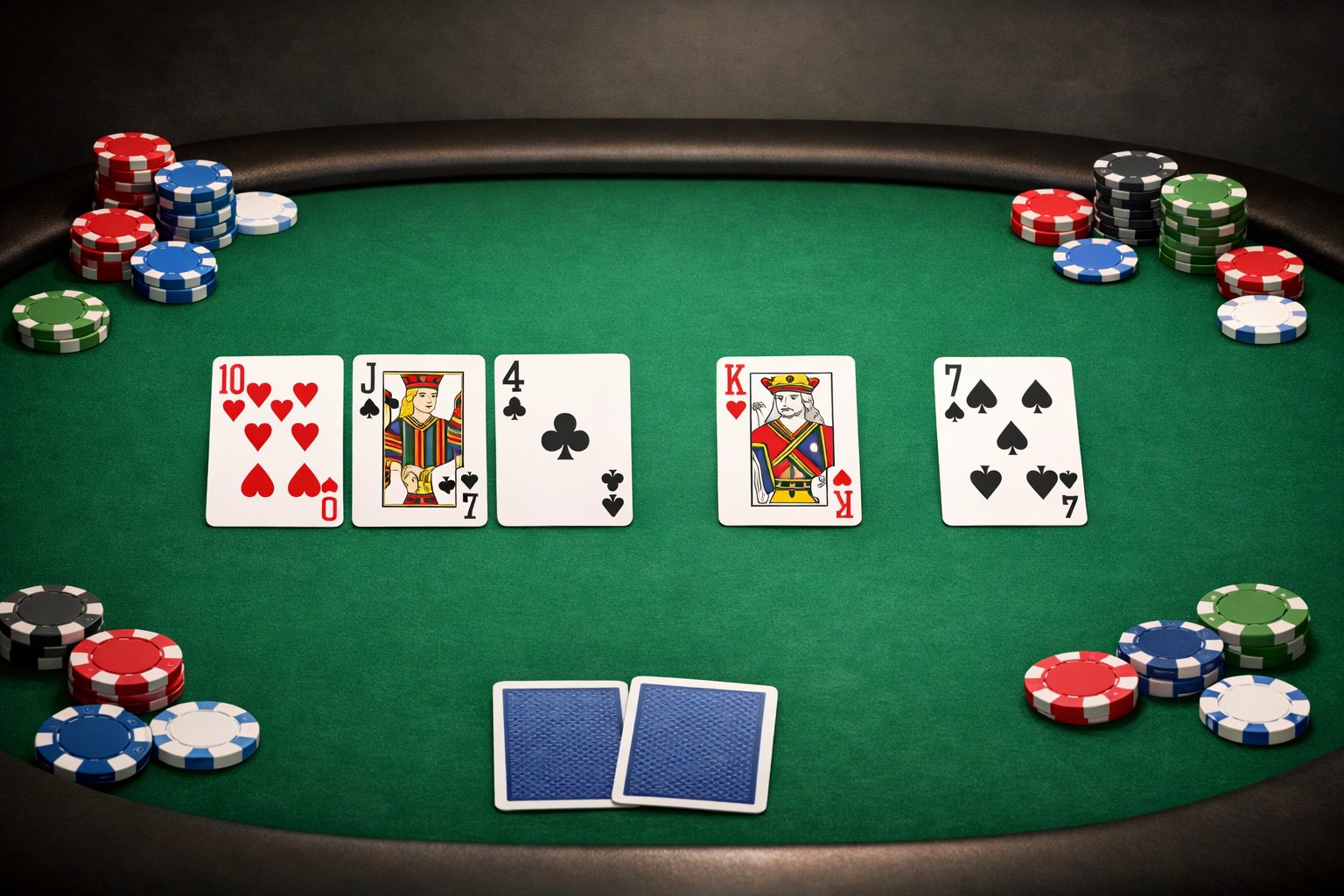
Texas Hold’em deals community cards in three distinct stages: the flop (three cards), the turn (one card), and the river (one card). These five community cards combine with your two hole cards to form the best possible five-card poker hand.
The Order of Community Cards
The dealer reveals community cards in a specific order that never changes. First comes the flop, which puts three cards face-up on the table. This happens after the first betting round when you’ve only seen your hole cards.
Next is the turn, also called fourth street. The dealer burns one card and places a single community card on the table. You now have six total cards to work with—your two hole cards plus four community cards.
The river, sometimes called fifth street, is the final community card. After another burn card, the dealer reveals this last card. At this point, you have seven cards available: your two hole cards and all five community cards on the board.
Each stage is followed by its own betting round. The streets (flop, turn, river) create natural breaks in the action where you can evaluate your hand strength and make strategic decisions.
What Are Community Cards?
Community cards are shared cards that all players at the table can use to make their best hand. These five cards sit face-up in the center of the table where everyone can see them.
You combine community cards with your hole cards (the two private cards dealt to you at the start). You can use both of your hole cards, just one of them, or even none of them. The goal is to make the strongest five-card poker hand possible.
Community cards determine many hand possibilities:
- Flush potential requires three cards of the same suit on the board
- Straight potential needs at least three cards in sequential order
- Paired boards create opportunities for full houses and four-of-a-kind
When the board doesn’t offer strong combinations, it’s called a rainbow (multiple suits with no flush draws).
Comparing Texas Hold’em and Omaha
Both Texas Hold’em and Omaha use the same flop, turn, and river structure. The dealing order stays identical—three cards for the flop, one for the turn, and one for the river.
The key difference is in your hole cards. Hold’em gives you two private cards, while Omaha deals four. This changes how you build your final hand.
In Hold’em, you can use zero, one, or both hole cards with the community cards. Omaha is stricter—you must use exactly two of your four hole cards and exactly three community cards. This rule significantly changes strategy even though the streets follow the same pattern.
The Flop Stage
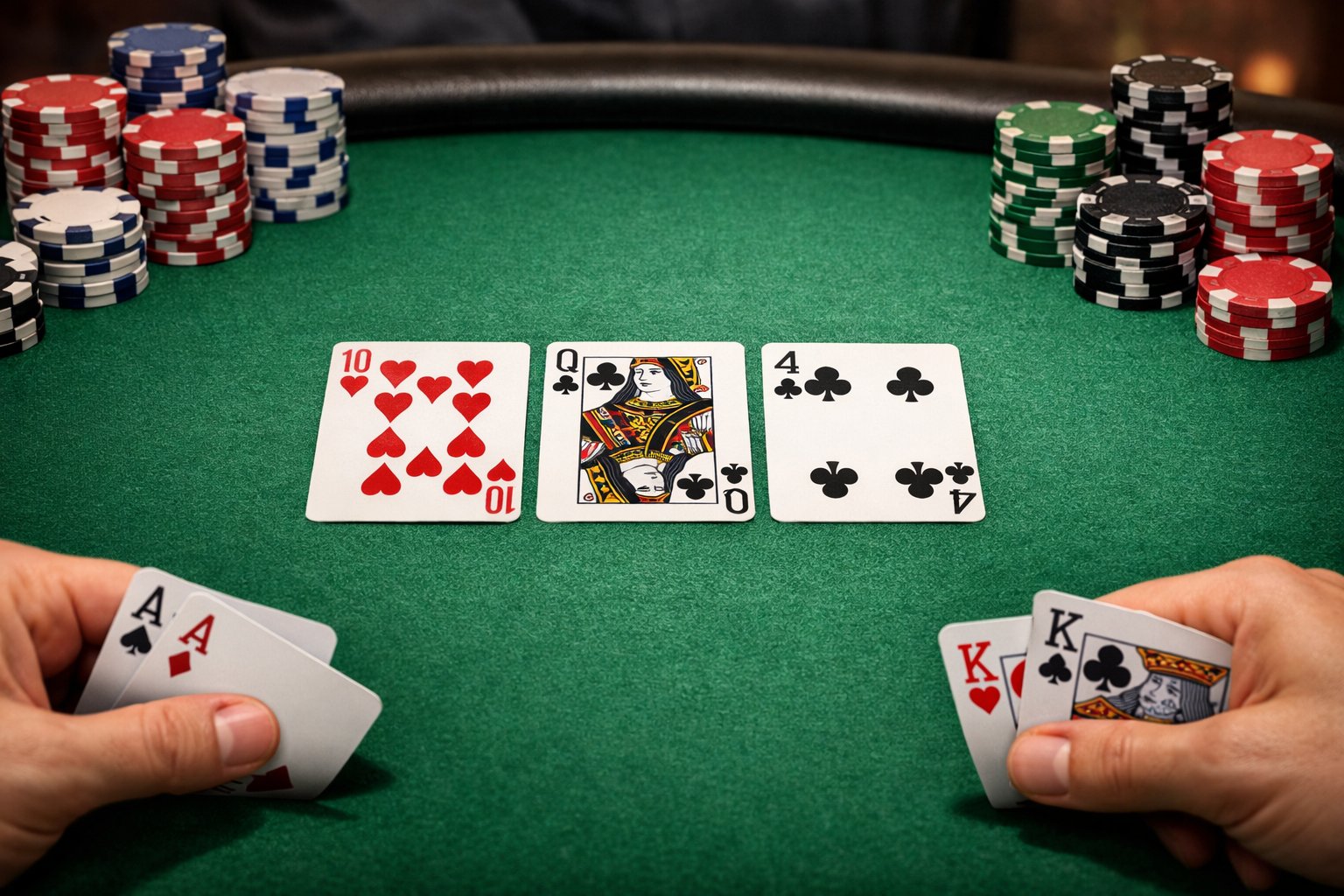
The flop brings three community cards to the table at once, giving you five total cards to work with when combined with your two hole cards. This moment changes everything about your hand and determines whether you should continue playing or fold.
How the Flop Is Dealt
Before the flop comes out, the dealer burns one card by placing it face-down in the discard pile. This prevents cheating in case the top card was marked or accidentally exposed. The dealer then places three cards face-up in the center of the table.
These three cards are community cards that every player can use. You now have a five-card hand made from your two hole cards plus these three shared cards. A betting round starts after the flop is dealt, beginning with the player to the left of the dealer button.
Typical Flop Textures
Flop texture describes how the three community cards relate to each other. A rainbow flop shows three different suits, making a flush impossible until later streets. A two-tone flop has two cards of the same suit, creating potential flush draws.
Coordinated flops contain cards that work together, like 8-9-10 or J-Q-K, which create many straight possibilities. Dry flops have cards that don’t connect well, such as 2-7-K with different suits. Paired flops put two matching cards on the board, like 9-9-4.
Wet flops are dangerous because they create multiple drawing possibilities. A flop of 7♥ 8♥ 9♠ lets players chase both straights and flush draws. Dry flops like K♠ 6♦ 2♣ give fewer options for improving hands.
Flop Impact on Hand Strength
Your hand strength changes dramatically based on what the flop shows. A strong starting hand might become weak if the flop doesn’t help you. Conversely, a mediocre starting hand can become powerful with the right flop.
You might flop a made hand like a flush, straight, or three of a kind. These hands are strong but not guaranteed winners. You could also flop a drawing hand like a flush draw (four cards to a flush) or straight draw (four cards to a straight).
Top pair means you matched one hole card with the highest flop card. This is often good but vulnerable to better hands. Two pair or a set (three of a kind using a pocket pair) are stronger holdings. Missing the flop entirely is common—you’ll often have nothing but high card value.
Decisions After the Flop
Your action depends on your hand strength, position, and the number of opponents. With a strong made hand, you usually want to bet or raise to build the pot and protect against draws. Medium-strength hands might call to see the turn card cheaply.
Drawing hands need pot odds to justify continuing. If you have a flush draw, you need roughly 4-to-1 pot odds to call profitably. Straight draws vary in strength—an open-ended straight draw (eight cards can complete it) is stronger than a gutshot (only four cards help).
Position matters significantly in flop games. Acting last gives you information about opponent actions before you decide. If you’re first to act with a weak hand, checking is safer than betting. Folding is correct when the flop completely misses your hand and opponents show strength through betting.
Flop Strategy Fundamentals
The flop determines whether your hand has potential or needs to be abandoned. Your decisions at this stage shape the betting rounds ahead and directly impact your chip stack.
Post-Flop Betting Dynamics
The flop reveals three community cards and changes everything about your hand strength. You need to evaluate how the flop connects with your hole cards and consider what hands your opponents might hold.
Position matters significantly in post-flop betting. If you act later in the betting round, you gain information from other players’ actions before making your decision. Players in early position must act with less information and face more risk.
Key factors that influence post-flop betting:
- Board texture (connected, paired, or rainbow)
- Number of opponents still in the hand
- Pot size relative to remaining stacks
- Your position at the table
Bet sizing sends messages to your opponents. A small bet might indicate weakness or could be a trap with a strong hand. Larger bets typically protect strong hands or represent strength when bluffing.
Continuation Bets Explained
A continuation bet (c-bet) occurs when the pre-flop aggressor bets again on the flop. This move suggests you still have the strongest hand regardless of whether the flop improved your cards.
C-bets work best on certain board textures. Dry flops with disconnected cards make good c-bet opportunities because opponents rarely connect strongly with these boards. Wet flops with potential straights or flushes require more caution.
Your c-bet frequency should vary based on position and opponents. Against tight players who fold often, c-betting more frequently makes sense. Against calling stations who rarely fold, you need actual hand strength to continue betting.
Bet sizing for c-bets typically ranges from 50% to 75% of the pot. Smaller bets risk less while still applying pressure. Larger bets protect stronger hands and make draws expensive for opponents.
Recognizing When to Fold or Raise
Folding saves money when the flop misses your hand completely. If you held A-K and the flop comes 8-7-2, you have nothing but ace-high. Continuing costs chips without reasonable improvement chances.
You should raise when you flop strong hands or quality draws. Top pair with a good kicker deserves protection through raising. Sets and two pair also warrant raises to build the pot and charge drawing hands.
Situations that call for a raise:
- You flopped a set or better
- You have top pair with a strong kicker
- You want to eliminate drawing hands
- You sense weakness and can take the pot
Call only when you have proper pot odds for your draw or when raising pushes out worse hands that might pay you later. Calling keeps the pot manageable when you hold marginal hands with showdown value.
Bluffing on the flop works when the board is scary and your opponent shows hesitation. A flop with three suited cards or potential straights creates concern for opponents holding weak pairs.
Mastering the Turn
The turn card adds a fourth community card to the board and creates new betting dynamics that require careful calculation and strategic thinking. Your decisions here become more expensive and your reads on opponents more critical.
What Is the Turn Card?
The turn card, also called fourth street, is the single community card the dealer places face-up after the flop betting round ends. This card brings the total number of community cards to four, leaving just one more card to come.
You now have six of your seven total cards (two hole cards plus four community cards). This gives you about 86% of the final information you’ll have to make your decision. The turn represents a major shift because you’re much closer to your final hand than you were on the flop.
Fourth street starts a new betting round. The stakes often double at this point in limit games. In no-limit games, the pot is typically larger, which means bets and raises cost you more chips.
Turn Effects on Odds and Hand Ranges
The turn card changes your pot odds and drawing odds significantly. If you have a flush draw, your chances of hitting on the river drop to about 20% (roughly 4 to 1 against). A straight draw with eight outs gives you around 17% equity.
Your opponent’s hand range narrows on the turn. Players who call or raise usually have made hands, strong draws, or are bluffing. You need to consider:
- How the turn card connects to the flop texture
- Whether it completes obvious draws
- If it changes the strongest possible hands
- How your opponent bet on previous streets
The turn often eliminates weaker holdings from your opponent’s range. Someone who was drawing to a flush might fold if the turn doesn’t help them and you bet again.
Strategic Adjustments on the Turn
Your bet sizing on the turn should reflect the pot size and your goals. Larger bets (65-75% of the pot) work well for value or protection. Smaller bets (33-50% of the pot) can extract value from medium-strength hands or set up river plays.
Bluffing becomes more expensive but more credible on fourth street. You’ve shown strength through multiple betting rounds, which makes your story more believable. However, you’re risking more chips with only one card to come.
You should tighten your continuing range on the turn. Don’t chase draws without proper pot odds. If you need 4 to 1 odds to call with your flush draw but the pot only offers 2 to 1, you should fold. Calculate whether calling a turn bet is profitable based on the money already in the pot versus the bet you must call.
Pay attention to your position. Acting last gives you information about how opponents react to the turn card before you commit more chips.
The River Decision Point
The river card completes all possible hands and forces you to make your final decision with complete information. Your choice to bet, call, raise, or fold at this stage determines whether you win or lose the pot.
Defining the River Card
The river is the fifth and final community card dealt face-up on the board. This card is also called fifth street in poker terminology. Once the dealer places the river card, all five community cards are visible to every player at the table.
You now have access to seven total cards: your two hole cards plus the five community cards. This means you can see the strongest possible hand you can make. The river completes any potential straights, flushes, or other drawing hands that players may have been chasing through the flop and turn.
River Betting and Showdown
After the river card appears, the final betting round begins. You can check, bet, call, raise, or fold based on your hand strength and your read of opponents. This is your last chance to put money in the pot or to save chips by folding.
If betting occurs and players call, the hand goes to showdown. Players reveal their hole cards and the best five-card hand wins the pot. If all players except one fold during river betting, that remaining player wins without showing cards.
The river betting round follows the same structure as previous rounds. The action starts with the first active player to the left of the dealer button.
River-Specific Strategy
River strategy requires you to evaluate whether you have the best hand based on all available information. You want to bet for value when you believe your hand is stronger than what your opponent holds and they will call with a weaker hand.
Bluffing becomes riskier on the river because no more cards can improve your hand. Your bluff must tell a consistent story based on how you played earlier betting rounds. If you represented a flush draw on the turn, the river must complete that flush for your bluff to be believable.
You should fold when the river card likely improved your opponent’s hand beyond yours. Consider the pot odds and your opponent’s betting patterns throughout the hand. A large river bet from a tight player often signals genuine strength rather than a bluff.
Reading the Board and Hand Evaluation
Understanding the community cards helps you figure out your hand strength and what your opponents might hold. Board texture tells you about possible draws and completed hands, while knowing the nuts shows you the strongest hand possible at any moment.
Board Texture Analysis
Board texture describes how the community cards connect and what hands they might create. A rainbow flop has three different suits, which means nobody can have a flush yet. Two cards of the same suit create a two-tone flop, giving players a flush draw if they hold two more of that suit.
A monotone flop shows three cards of the same suit. This is dangerous because someone could already have a flush. A paired flop adds full house and four of a kind possibilities to the mix.
Connected boards like 7-8-9 allow for straight draws and completed straights. Dry boards with gaps like K-7-2 rainbow offer fewer drawing opportunities. You should check if the cards are high or low, paired or unpaired, and suited or unsuited.
Identifying the Nuts
The nuts means you have the best possible hand based on the current board. On a board of 6-7-8-9-J with no flush possible, anyone holding 10-7 has the nut straight. You need to identify the nuts to understand where your hand ranks.
A paired board changes everything. On K-K-7-2-2, the nuts would be pocket Kings for four of a kind. The second nuts would be pocket sevens for a smaller four of a kind.
When three suited cards appear, the nut hand becomes a flush with the ace of that suit. If the board shows A-K-Q-J-10, anyone with any of these cards plays the board for a Broadway straight. Knowing the nuts helps you decide if you should bet aggressively or proceed carefully.
Playing the Board
Playing the board happens when the five community cards make a better hand than anything you can create with your hole cards. If the board shows 5-6-7-8-9 and you hold 2-3, you have a nine-high straight just like everyone else at the table.
Your hole cards become irrelevant in this situation. The best you can hope for is a split pot unless someone holds a 10 for a higher straight. This often happens with straights on the board or when high pairs appear that beat your pocket cards.
You should recognize these spots quickly. Betting when you’re playing the board rarely makes sense because you can’t win outright. Your kicker doesn’t matter if the board already contains five cards that beat anything you can make.
Adjusting to Draws and Blockers
Draw situations require you to count outs and consider pot odds. A flush draw gives you nine outs if you need one more card of your suit. An open-ended straight draw offers eight outs to complete your hand.
Blockers are cards in your hand that prevent opponents from holding certain hands. If you hold the ace of spades and three spades appear on the board, you block the nut flush. This information helps you make better decisions about betting and calling.
You should factor in how draws change from flop to turn to river. A hand with both a flush draw and straight draw has more value than a single draw. The board texture determines which draws are possible and how likely your opponents are to have them. When you hold blockers to strong hands, you can sometimes bluff more effectively because those hands are less likely in your opponent’s range.
Key Poker Concepts for Flop, Turn, and River
Understanding pot odds and bet sizing helps you make profitable decisions after the flop. Your bluff frequency should change as you move from flop to turn to river, and your pre-flop decisions affect every street that follows.
Pot Odds and Bet Sizing
Pot odds tell you if a call is worth making by comparing the bet size to the pot. If the pot is $100 and your opponent bets $50, you need to call $50 to win $150. This gives you 3:1 pot odds. You should call when your chance of winning is better than 25%.
Your bet sizing on each street sends a message. On the flop, a bet of half to two-thirds of the pot is standard. On the turn, you might bet larger because the pot has grown and fewer cards remain. River bets often range from half pot to overbet depending on your hand strength.
In no-limit games, you control your bet size. In fixed-limit games, your bets are set amounts, usually one big bet on the flop and turn, and two big bets on the river.
Position matters for both concepts. When you act after your opponents, you gain information that helps you calculate pot odds more accurately and choose better bet sizes.
Bluff Frequency Across Streets
Your bluff frequency should decrease as you move from flop to river. On the flop, you can bluff more often because many draws are possible and players fold weak hands easily. A balanced strategy might include bluffing 30-40% of the time in certain spots.
The turn requires more caution. The board is more defined and your opponents have shown continued interest in the hand. Your bluff frequency should drop to around 20-30% in most situations.
River bluffs are the most expensive and risky. You should only bluff when your hand has no showdown value and the board texture supports your betting story. Most players bluff too much on the river. A frequency of 15-25% works better in balanced play.
Board texture affects these numbers significantly. Coordinated boards with many possible straights and flushes allow more bluffing than dry boards.
Starting Hands and Pre-Flop Impact
Your starting hand choice determines which flops, turns, and rivers you can play profitably. Premium hands like pocket aces or kings play well on most boards. Medium pairs and suited connectors need specific board textures to continue.
Position changes which hands you should play pre-flop. From early position, you need stronger hands. From the dealer button, you can play more hands because you act last on every post-flop street.
The blinds are forced bets that put you in difficult positions. The small blind and big blind act first after the flop, which is a disadvantage. You need stronger hands to call raises from the blinds.
Your pre-flop action also matters. If you raised before the flop, you can represent strong hands more easily on later streets. If you called, your range appears weaker to observant opponents.
Online Poker Considerations
Online poker moves faster than live play. You see more hands per hour, which means you need to make quicker decisions on each street. Taking notes on opponents helps you remember their tendencies across multiple hands.
Many online players use timing tells. A quick call often means a drawing hand. A long pause followed by a raise usually indicates strength. You can use these patterns to adjust your strategy on the turn and river.
Stack sizes display clearly in online games. You can calculate pot odds instantly and plan your bet sizing for future streets. This information helps you decide whether to continue on the flop when you have a draw.
Online poker also lets you multi-table, but this reduces the attention you can give to each hand. Playing fewer tables helps you focus on important details like bet sizing patterns and opponent tendencies across all three streets.
Frequently Asked Questions
Players often have specific questions about how community cards work in Texas Hold’em. The dealing process follows strict rules, and understanding betting rounds, strategy, and card probabilities helps you make better decisions at the table.
What are the rules for dealing the flop, turn, and river in Texas Hold’em?
The dealer burns one card before revealing the flop, which consists of three community cards dealt face-up in the center of the table. This happens after the first betting round following the hole cards.
Before dealing the turn, the dealer burns another card and then places one community card face-up. The same process repeats for the river—one card is burned, and the final community card is revealed face-up.
Each community card round follows this burn-and-deal pattern. The burned cards are discarded without being looked at to prevent cheating in case the top card was accidentally exposed or marked.
How does the betting structure work after the flop, turn, and river cards are dealt in Texas Hold’em?
A betting round occurs after the flop is revealed. Players still in the hand can check, bet, call, raise, or fold based on their five-card combination (two hole cards plus three community cards).
Another betting round takes place after the turn card is dealt. At this point, you have six cards available to make your best five-card hand.
The final betting round happens after the river card is revealed. You now have seven total cards—your two hole cards and five community cards—to create your strongest five-card poker hand.
What strategies should players consider when evaluating the flop, turn, and river in Texas Hold’em?
You should assess how the flop connects with your hole cards and consider possible hands your opponents might hold. Look for potential straights, flushes, or pairs that could develop.
The turn card adds new information that can strengthen or weaken your position. You need to recalculate pot odds and determine if continuing is profitable based on the cost to call versus the potential payout.
On the river, your hand is complete. You must decide whether to bet for value, bluff, or fold based on the entire board texture and your opponents’ betting patterns throughout the hand.
Can you explain the importance of ‘burning’ a card before revealing the flop, turn, and river in Texas Hold’em?
Burning a card protects the game’s integrity by preventing cheating. If the top card of the deck was accidentally exposed, marked, or identified by a player, removing it ensures no one gains an unfair advantage.
The dealer discards the burned card face-down without looking at it. This standard practice occurs before each community card round to maintain fair play.
Burning cards has been a poker tradition for decades. It adds a layer of security that keeps the game honest, even in casual home games.
What are the odds of completing a specific hand after the flop, turn, and river in Texas Hold’em?
If you have four cards to a flush after the flop, you have roughly a 35% chance of completing it by the river. With nine outs (cards that complete your flush) and two cards to come, your odds improve with each street.
An open-ended straight draw after the flop gives you about eight outs and approximately a 31% chance to complete by the river. These percentages help you determine if calling a bet is mathematically sound.
Your odds change significantly between the turn and river. A flush draw on the turn has about a 20% chance to hit on the river, since only one card remains.
How do the flop, turn, and river cards influence the ranking of Texas Hold’em hands?
The community cards determine which hand rankings are possible. You cannot make a flush unless at least three cards of the same suit appear on the board.
Similarly, straight possibilities require at least three cards in sequence among the community cards. A board showing 2-7-9 with different suits limits the potential hands players can make.
You use any combination of your two hole cards and the five community cards to create your best five-card hand. You can use both hole cards, one hole card, or neither—playing the board if the five community cards form your strongest hand.